


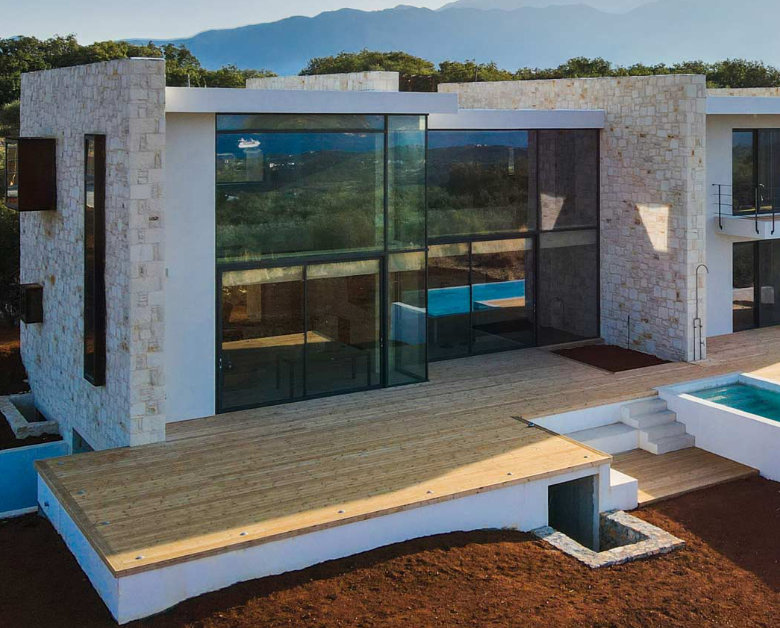
Significantly reduces energy requirements for cooling and heating.

EXTERNAL
THERMAL INSULATION
- The thermal facade has been implemented since the 1960s in Western and Central Europe
- It offers particular flexibility in construction as the thermal insulation material is placed on the external surface of the building, after the completion of the masonry construction works
- It is the most effective solution for the retrospective thermal insulation of existing buildings
- External thermal insulation is a valuable tool for energy saving and aesthetic upgrading of buildings, which quickly compensates for the expense of its implementation.
CERTIFICATE
In January 2021, the first nationwide effort began to train, evaluate and finally obtain official state certification with the title "Certified Installers of External Thermal Insulation Systems" external thermal insulation installers. Always wanting to offer high quality services to our customers, we took the decision to participate in this effort, in order to enrich our knowledge on the subject at a theoretical and practical level and obtain an official certificate.
The program was implemented under the auspices of the National Accreditation Organization (ΕΣΥΔ) in collaboration with the European certification body EUROCERT – European Inspections & Certification Company S.A.
It consisted of 3 training sections leading to the certification exams. Upon completion of the seminars, 29/3/2021 was set as the date for the theory exam, which was conducted online. After the successful completion of the theoretical exam, our participation in the practical exam that took place on Friday 18/6/2021 in Athens at the premises of SAINT-GOBAIN was set. By successfully completing the practical exam, we now hold a certification with official state validity, thus upgrading our services.

BENEFITS OF EXTERNAL THERMAL INSULATION
- Minimizes the problem of thermal bridges.
- It significantly reduces energy requirements for cooling and heating.
- Improves the quality of the indoor environment.
- It reduces aesthetic problems of the shell (cracks, etc.).
- It makes it possible to use a greater thickness of thermal insulation without losing valuable internal space.
- It provides great flexibility in the final configuration of the facade.
- It is the most rational solution for existing buildings that are not thermally insulated or poorly insulated.
- A prerequisite for its successful implementation, is the selection of globally certified thermal facade systems and specialized and experienced technical staff.
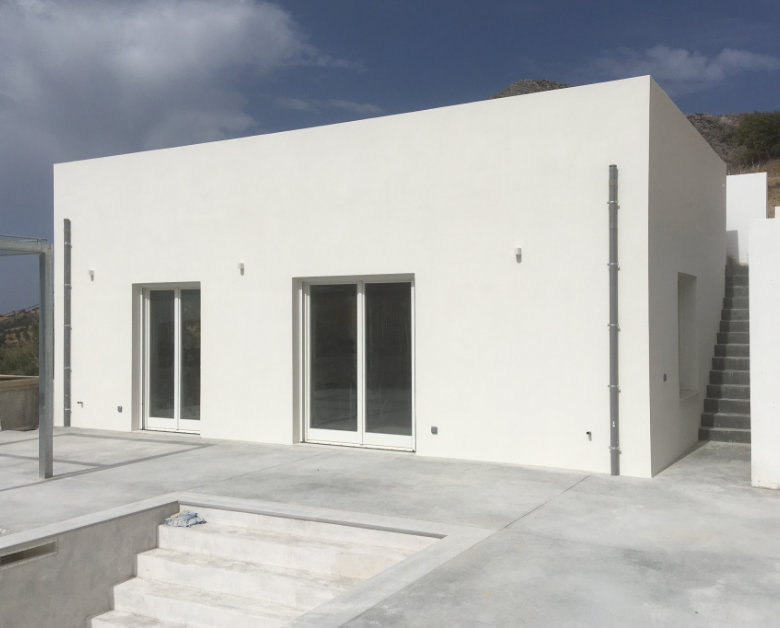
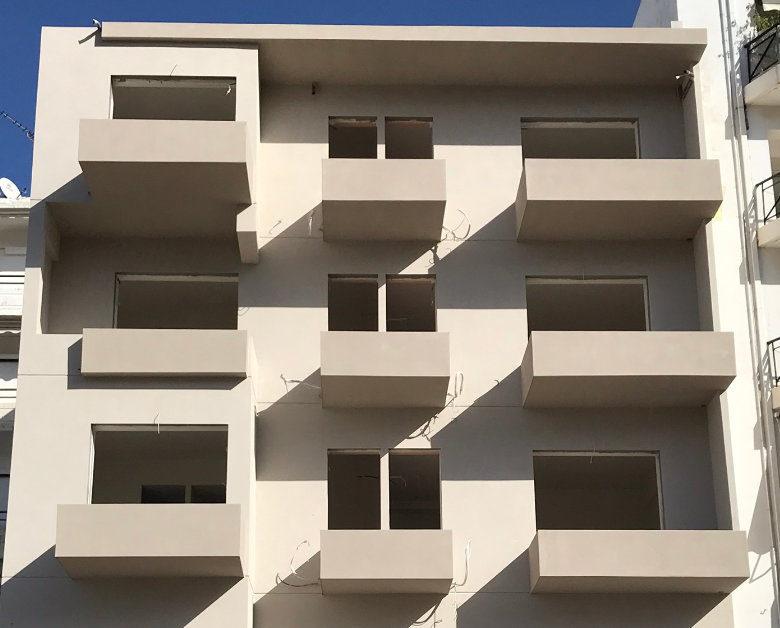
TECHNICAL DESCRIPTION OF TASKS
- Appropriate preparation of the substrate to ensure good adhesion of the system. At the base of the building (high waterproofing zone) and at a height of 0.50m it will be waterproofed with cementitious spreadable waterproofant.
- Next is the application of the welding material with a spatula. The insulating plates of expanded polystyrene EPS 80 ISOPOR with dimensions 0.60X1.00m are placed directly, accompanied by the necessary certificates suitable for external thermal insulation with λ=0.036 W/m.K, in series starting from bottom to top.
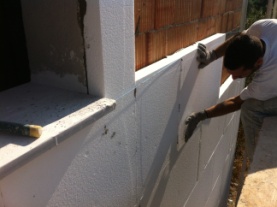
- The plate will be placed with glue on the surfaces after waterproofing it with spreadable sealant. Each subsequent row is placed about half a plate offset, so as to avoid vertical and horizontal joints. Any adhesive material on the sides of the plates must be removed to prevent cracking.
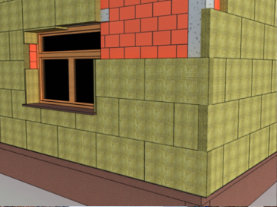
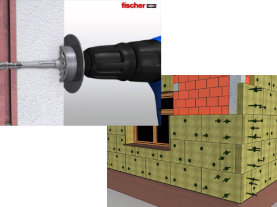
- The mounted plates are left for at least one day to ensure sufficient hardness of the welding material. Then follows the anchoring of the plates with specially certified plugs.
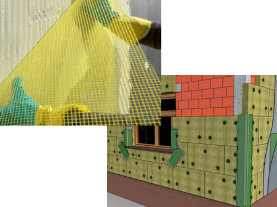
- After 2-3 days, the fiber-reinforced reinforcing material is applied to the insulating plates by encapsulating the mesh. The anti-alkaline mesh (fiberglass mesh weighing 145gr/m2) is encased in the fresh reinforcement layer with overlapping of its sheets by 10cm. The total thickness of the reinforcement layer amounts to 3-4mm.
- Next, primer is applied
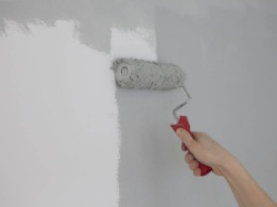
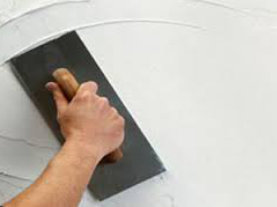
-The final stage of the external thermal insulation system is the application of a coating, granulometry 0.5 mm – 3.5mm with a spatula. (Color selection option)
DESCRIPTION OF THERMAL INSULATION MATERIALS
The main materials used in thermal facade systems are the following:
- In thermal insulation materials there are options::
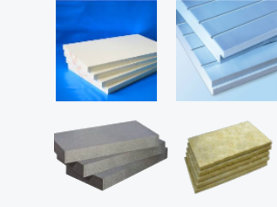
- Expanded polystyrene ISOPOR EPS, (white color and the most popular choice due to better performance - cost) with choice of density.
- Extruded Polystyrene XPS (Blue color)
- Graphite polystyrene NEOPOR, (Dark gray color)
- Stone wool (mainly used in commercial buildings, airports – factories, due to its fire resistance)
- In coatings there are the options:
- Acrylic coating
- Silicone coating
- Silicone coating with nanotechnology
- Eco friendly silicone coating
In all coatings there is the choice of granulometry starting from 0.5mm to 3.5mm grain size with a growth rate of 0.5mm per size as well as the choice of color in a very wide range of colors